Showing posts with label Australia. Show all posts

Fantastic Diving On Northern New South Wales

Australia is undoubtedly unique. With over 35,000km's of magnificent coastline, they have superb diving in the tropical waters of the world renowned Great Barrier Reef and northern Western Australia, as well as brilliant temperate diving in the southern states and Tasmania. Both tropical and temperate marine life are found in the Solitary Islands off northern New South Wales, popular Byron Bay near the Queensland border, and the fabulous Abrolhos Islands on the west coast off Geraldton.

Port Macquarie Citylighthouse-beach

Take a pit stop at Port Macquarie, the halfway point between Sydney and Byron Bay. Here you can kick back and relax or take part in activities like camel riding along the beach, sea kayaking, 4WD tours, water sports or tandem skydiving. And for the rest, you can visit the Port Macquarie Hotels. They have international standard rooms with cheap price.

coffs_harbour_big_banana Next destination is Coffs Harbour. Coffs Harbour is famed for its Big Banana, its beaches, and its rainforest. The swimming is magnificent, and the fish are almost always jumping. There are also beautiful nature trails to explore and whale watching cruises to enjoy. Known as the action capital of the coffs-harbour North Coast, there’s plenty of adrenaline rushes to be had. Go white-water rafting, diving, whale watching or sky diving. You can bring your own or hire at Coffs Harbour. The boat ride from the marina to the main dive sites at Split Solitary Island and South Solitary Island is around 20 and 40 minutes respectively. Below awaits fields of plate coral and underwater arches, endangered grey nurse shark, big blue gropers, colorful banded anemone fish, moray eels, bull and eagle rays, turtles, dolphins, giant cuttlefish, lion fish, flying fish and many more colorful creatures.

311376.jpg In Coffs Harbour, you can visit Coffs Harbour Hotels and accommodation for a cheap price with the international quality. They will bring you to places that you want to visit during the Coffs Harbour. And if you still have energy left after an action packed day, check out the great nightlife.

bb-whale5 Byron Bay is one of the best places in Australia. Byron Bay is a town in the state of New South Wales neighboring Queensland on the eastern most point of the mainland of Australia about 600 kilometer north of Sydney and 140 kilometer south of Brisbane. Byron Bay boasts of several beaches good for surfing. Byron Bay is also popular for sky diving and whale watching as well as for its wildlife. Byron Bay is the meeting place of temperate and tropical waters which makes it an ideal place for scuba diving and snorkeling, particularly at Julian Rocks Marine Reserve, one of Australia's top ten dive sites.

bb-clownfish3 bb-greynrs3

Byron Bay host events such as the Byron Underwater Festival, Byron Bay Yoga fest, East Coast Blues & Roots Festival, EHVA Festival for Art Lovers and Artists, Byron Bay Writers Festival, Byron Bay Arts & Music Festival, Byron Bay Farmers Market, and many more.

432702.jpg Finally decided to stay in Byron Bay Hotels is an appropriate decision. During the day, you could walk along the beach, which was good. And with the cheap price, you can enjoy all the luxury provided by them.


Top 9 Places To Visit in Australia

Australia has something for just about everyone. From simple holidays to culture filled excitement, there are all sorts of options to enjoy. Here are ten of the must see places and events around Australia that you can consider for your next holiday.

  1. Sydney

clip_image001

Sydney is Australia’s number one travel destination in terms of number of visitors. The Sydney Opera House was completed in the 1960's. The unique design for the facility, coupled with the excellent acoustics, make this cultural icon a must see stop that even persons who are not interested in opera will enjoy.

One of the great things about Sydney is there is both culture and lots of fun activities as well. The beaches provide some of the most beautiful ocean side playgrounds in the entire world. Visitors can spend endless hours enjoying the sun and pristine sands, then enjoy tours into some of the surrounding bush areas. Later, a night out on the town is easy to manage, with an array of night spots that will accommodate just about every interest. While in town, don't forget to admire the spectacular Harbour Bridge.


2. Cairns & the Great Barrier Reef


Far North Queensland is a wonderful tropical paradise. Cairns is the main entry point and from there you can travel north or south and out to beautiful island resorts. Luxury holiday homes are a great accommodation option in this part of Australia.

clip_image002


The Great Barrier Reef is known as the world's largest coral reef, the Great Barrier Reef stretches along the Queensland coast for a distance of approximately 35 million hectares. Many varieties of fish and other forms of sea life make the Reef home, and there are plenty of opportunities to learn about and observe. As a family opportunity, the Great Barrier Reef is an activity that will fascinate even the most jaded of travelers.

3. Brisbane


While visiting along the Great Barrier Reef, Brisbane is the place to go when you need a taste of the big city. Located in Queensland, the city is known for spectacular night spots that offer a little something for everyone, as well as a range of cuisine that is considered to be the best in Australia by many visitors.

4. Melbourne

clip_image001[7]


Considered by many to be the emotional heart of Australia, Melbourne offers a mix of modern architecture and amenities along with some of the most beautiful examples of Victorian architecture in the world. Shopping and food that ranges from fine cuisine to guilty pleasures can easily be found at Federation Square and the New Quay.

5. The Great Ocean Road


No visit to Australia is complete without enjoying the view from the Great Ocean Road. Running for over two hundred miles along the coastline in the area of Victoria, the view is breathtaking any time of the year. There are plenty of interesting local restaurants to try along the way, as well as several great places to stop and enjoy a beer. The Great Ocean Road is a wonderful drive over a weekend or stay a little longer at a holiday rental property.


6. The Red Centre including Uluru-Tjuta National Park


Found in the Northern Territory, the Red Centre is considered to be the physical center spot of Australia. Tourists will enjoy viewing the Ayers Rock, which is also known as Uluru. Viewing Uluru is considered to be an ideal activity at sunrise and sunset, when the range of colors across the red rock seem to waver and change in fascinating patterns.

clip_image002[5]


Uluru-Tjuta National Park is an area that functions as both a wildlife preserve and a national park. Along with the Ayers Rock, the part also encompasses such sites as Alice Springs and the Olgas.


7. Canberra

Canberra is the Capital of Australia and a fascinating place to see. Visit Parliament House, the National Gallery of Australia, the National Library, National Archives which feature old movies, records, books and artifacts as well as the War Memorial. Four days is Canberra is adequate to see most of the attractions.


8. Adelaide


Considered to be the doorway into the Outback, Adelaide is a thriving city that includes some of the most prestigious vineyards in the country. There are a number of places around the city that are ideal for getting away from it all for a few days, as well as enjoying a night life that is low key but very active.


9. Tasmania

clip_image003


Tasmania offers breathtaking scenery, hiking and camping. Just off the coast, the main land you can reach Tasmania by car ferry or by short flight. Hobart is a stunning town on the Derwent river and features colonial architecture. The local food produce is deliciously fresh and restaurants reasonably priced.
Rent-A-Home.com.au lists a wide range of Holiday Accommodation in Australia including Holiday Rentals, Holiday Apartments, Holiday Homes and Serviced Apartments for short or long stay. For more information on Holiday Apartments Sydney, Serviced Apartments Sydney, visit http://www.rent-a-home.com.au.

By Samuell Armstrong

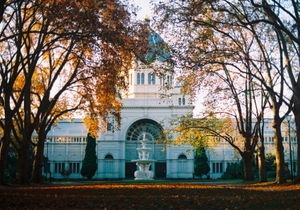
The Carlton Gardens


The Carlton Gardens is a World Heritage Site located on the northeastern edge of the Central Business District in the suburb of Carlton, in Melbourne, Victoria, Australia.

The 26 hectare (64 acre) site contains the Royal Exhibition Building, Melbourne Museum and Imax Cinema, tennis courts and an award winning children's playground. The rectangular site is bound by Victoria Street, Rathdowne Street, Carlton Street, and Nicholson Street. From the Exhibition building the gardens gently slope down to the southwest and northeast. According to the World Heritage listing the Royal Exhibition Buildings and Carlton Gardens are "of historical, architectural, aesthetic, social and scientific (botanical) significance to the State of Victoria."

The gardens are an outstanding example of Victorian era landscape design with sweeping lawns and varied European and Australian tree plantings consisting of deciduous English oaks, White Poplar, Plane trees, Elms, Conifers, Cedars, Turkey Oaks, Araucarias and evergreens such as Moreton Bay Figs, combined with flower beds of annuals and shrubs. A network of tree lined paths provide formal avenues for highlighting the fountains and architecture of the Exhibition building. This includes the grand allee of plane trees that lead to the exhibition building. Two small ornamental lakes adorn the southern section of the park. The northern section contains the Museum, tennis courts, maintenance depot and curator's cottage, and the children's playground designed as a Victorian maze.

The listing in the Victorian Heritage Register says in part:

"The Carlton Gardens are of scientific (botanical) significance for their outstanding collection of plants, including conifers, palms, evergreen and deciduous trees, many of which have grown to an outstanding size and form. The elm avenues of Ulmus procera and Ulmus × hollandica are significant as few examples remain world wide due to Dutch elm disease. The Garden contains a rare specimen of Acmena ingens, only five other specimens are known, an uncommon Harpephyllum caffrum and the largest recorded in Victoria, Taxodium distichum, and outstanding specimens of Chamaecyparis funebris and Ficus macrophylla, south west of the Royal Exhibition Building."

clip_image001

Wildlife includes possums, ducks and ducklings in spring, Tawny Frogmouths, and other urban environment birds.

The gardens contain three important fountains: the Exhibition Fountain, designed for the 1880 Exhibition by sculptor Joseph Hochgurtel; the French Fountain; and the Westgarth Drinking Fountain.

clip_image001[4]

Carlton Gardens south

History

  • 1839 - Large tracts of land surrounding the original town grid of Melbourne were reserved from sale by Superintendent Charles La Trobe. Most of this land was later sold and subdivided or used for the development of various public institutions, but a number of substantial sites were permanently reserved as public parks, including the Carlton Gardens as well as Flagstaff Gardens, Fitzroy Gardens, Treasury Gardens and Kings Domain.
  • Circa 1856 - The City of Melbourne obtained control of the Carlton Gardens, and engaged Edward La Trobe Bateman to prepare a design for the site. The path layout and other features of the design were built although limitations on funding for maintenance etc. resulted in frequent criticism.
  • 1870s - The colonial Victorian Government resumed control of the Gardens and minor changes and were made under the direction of Clement Hodgkinson. The site was soon afterwards drastically redesigned for the 1880 Melbourne International Exhibition by the architect Joseph Reed. The prominent local horticulturist William Sangster was engaged as a contractor to redevelop the gardens.
  • 1880 - Exhibition Building completed for the Melbourne International Exhibition that year. Temporary annexes to house some of the exhibition in the northern section were demolished after the exhibition closed on 30 April, 1881.
  • 1891 - The curator's Lodge was completed and lived in by John Guilfoyle.
  • 1901 - First Parliament of Australia opens in the Exhibition Building. The west annex of the Building becomes the site of the Victorian Parliament for the next 27 years.
  • 1948 to 1961 - part of the complex was used as a migrant reception centre.
  • 2001 - Taylor Cullity Lethlean with Mary Jeavons wins a landscape award for design and building a new children's playground of elegant yet robust resolution. The Jury described the design as a distinctive and unified design that respects its historic setting and addresses the demands of creative play for spatial and visual variety.
  • July 2004 - After several years of lobbying by the Melbourne City Council, The Royal Exhibition Building and Carlton Gardens, Melbourne, were inscribed on the World Heritage List at the 28th session of the World Heritage Committee held in Suzhou, China.

The Exhibition Building is still used for exhibitions, including for the annual Melbourne International Flower and Garden Show. The Melbourne Exhibition and Convention Centre, opened in 1996 at Southbank, provides more modern facilities and has become Melbourn'e prime location for exhibitions and conventions. It also hosts the exams for University of Melbourne in recent years.

Sydney Opera House , Australia


Sydney Opera House must be one of the most recognisable images of the modern world - up there with the Eiffel Tower and the Empire State Building - and one of the most photographed.
Not only is it recognisable, it has come to represent 'Australia'.


Although only having been open since 1973, it is as representative of Australia as the pyramids are of Egypt and the Colosseum of Rome.

The Opera House is situated on Bennelong Point, which reaches out into the harbour. The skyline of the Sydney Harbour Bridge, the blue water of the harbour and the Sydney Opera House, viewed from a ferry or from the air, is dramatic and unforgettable.

Ironic, perhaps, that this Australian icon - the Opera House with a roof evocative of a ship at full sail - was designed by renowned Danish architect - Jorn Utzon.

In the late 1950s the New South Wales (NSW) Government established an appeal fund to finance the construction of the Sydney Opera House, and conducted a competition for its design.

Utzon's design was chosen. The irony was that his design was, arguably, beyond the capabilities of engineering of the time. Utzon spent a couple of years reworking the design and it was 1961 before he had solved the problem of how to build the distinguishing feature - the 'sails' of the roof.

The venture experienced cost blow-outs and there were occasions when the NSW Government was tempted to call a halt. In 1966 the situation - with arguments about cost and the interior design, and the Government withholding progress payments - reached crisis point and Jorn Utzon resigned from the project. The building was eventually completed by others in 1973. After more than 30 years, the Sydney Opera House has its first interior designed by Utzon. The Utzon Room, a transformed reception hall that brings to life Jorn Utzon's original vision for his masterpiece, was officially opened on September 16 2004.
Sydney Opera House facts and figures

The Sydney Opera house:
• Was designed by Danish architect Jorn Utzon
• Was opened by Queen Elizabeth II on 20 October 1973
• Presented, as its first performance, The Australian Opera's production of War
and Peace by Prokofiev
• Cost $AU 102,000,000 to build
• Conducts 3000 events each year
• Provides guided tours to 200,000 people each year
• Has an annual audience of 2 million for its performances
• Includes 1000 rooms
• Is 185 metres long and 120 metres wide
• Has 2194 pre-cast concrete sections as its roof
• Has roof sections weighing up to 15 tons
• Has roof sections held together by 350 km of tensioned steel cable
• Has over 1 million tiles on the roof
• Uses 6225 square metres of glass and 645 kilometres of electric cable